As you browse the site, add accommodation, tours, events and attractions to your personalised trip by clicking the heart icon. When you’re done, click the heart icon in the menu at the top of the website to view your wishlist.
Review your list, remove any items you no longer need, then select “View your itinerary” to see your trip on a map, or send it to a friend.
Shadows of the Past: The Midlands Silhouette Trail
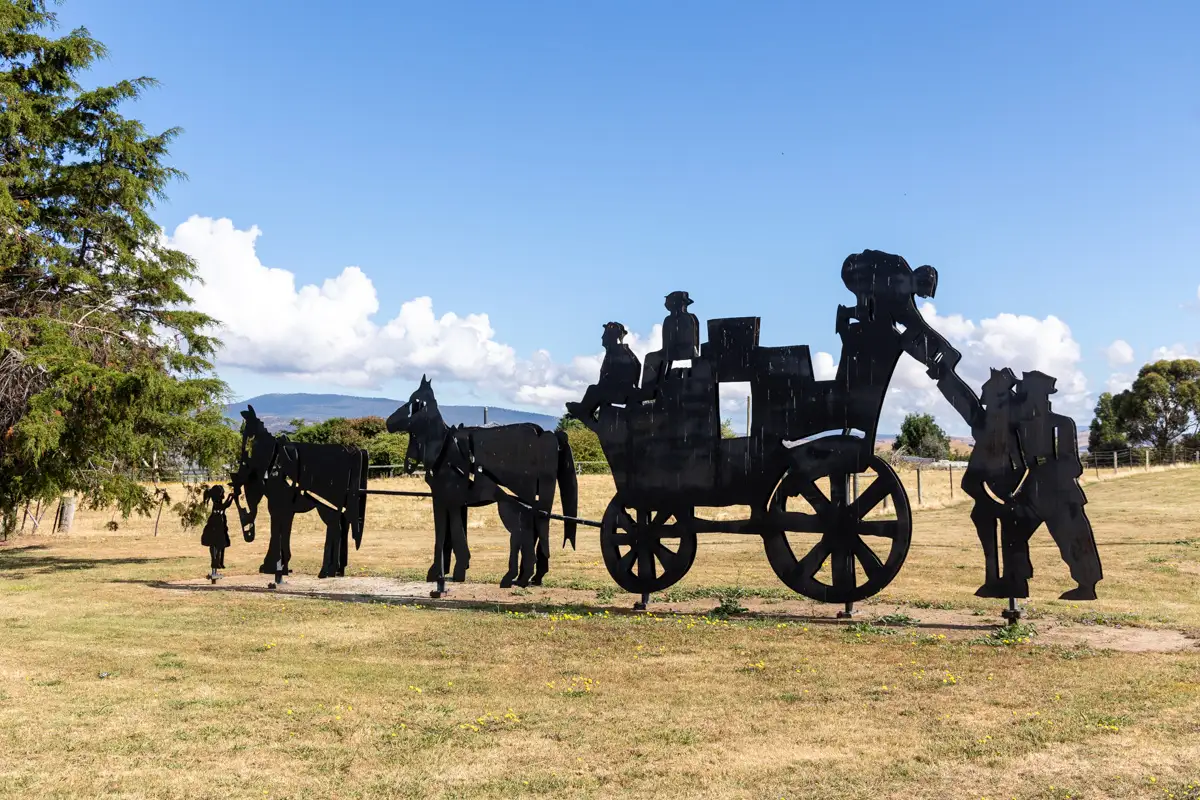
Shadows of the past, Heritage Highway. Image Credit: Darren Wright
When travelling through the Southern Midlands, play a game of Eye Spy: The Silhouette Trail edition!
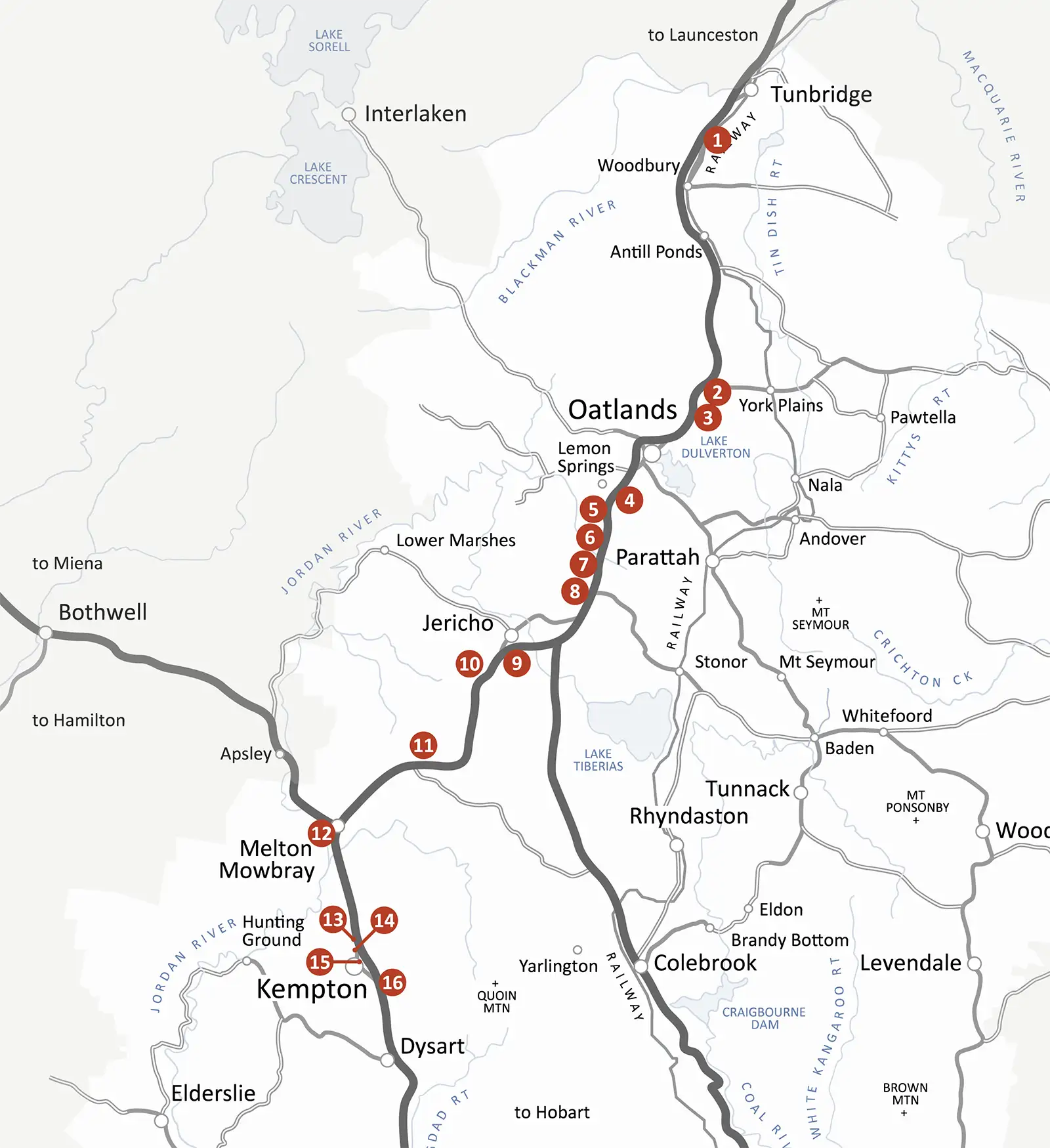
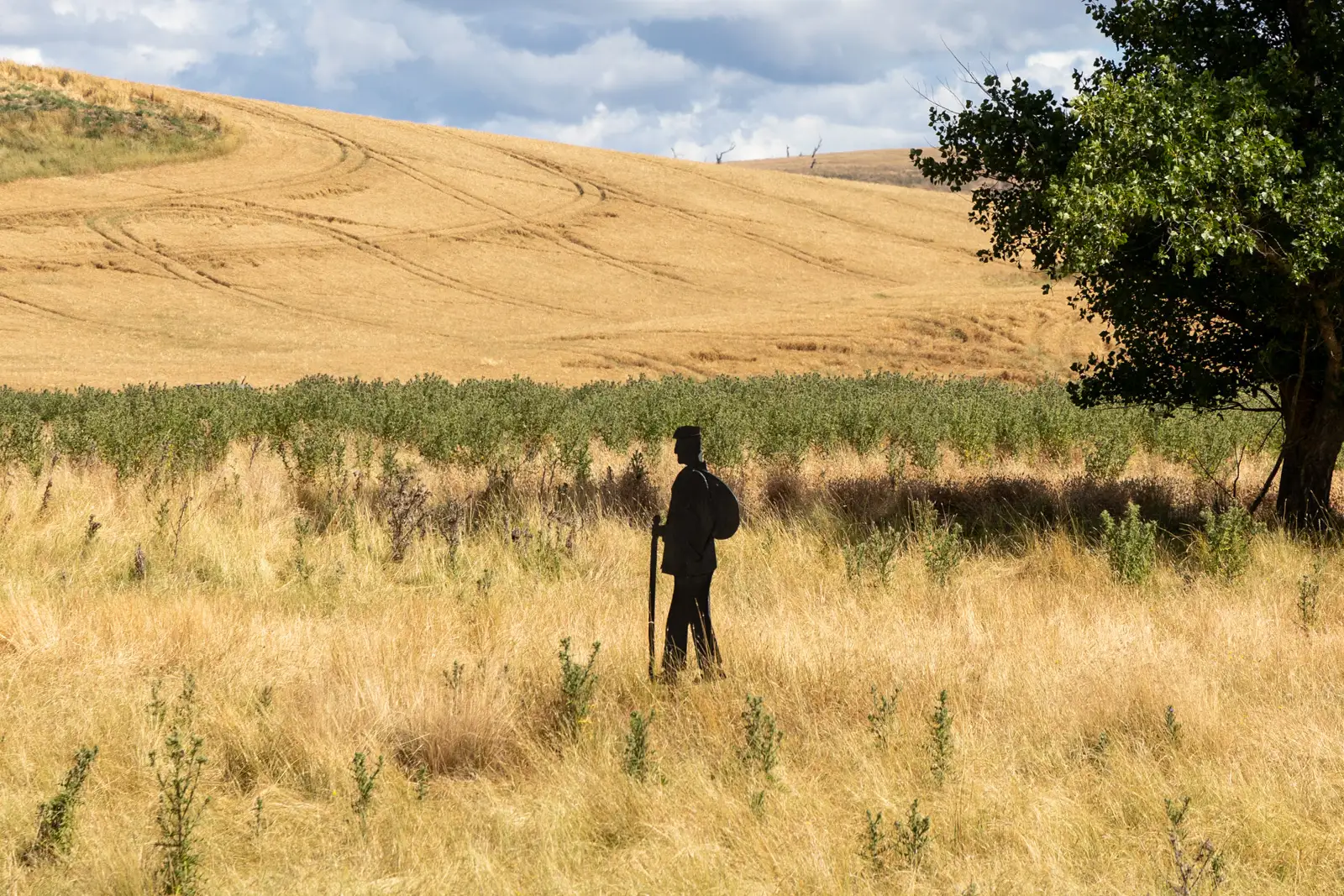
The sixteen sculptures dotted along the roadside and up on hilltops between Tunbridge and Kempton serve as poignant reminders of early colonial life on the Heritage Highway. The project was initiated by local artists, Folko Kooper and Maureen Craig, and informed by the meticulous records kept by colonial authorities. The silhouettes bring the stories of this intriguing region to life.
Shadows of the Past. Image Credit: Darren Wright
The troop of soldiers at St Peters Pass remind us that Van Diemen’s Land was first and foremost a British military outpost, while the professional hang man silhouette south of the Stonor turn-off might give you the willies! Could it be Hangman Solomon Blay, who dispatched his ‘clients’ with speed and efficiency? Execution was intended to be a deterrent, with hangings carried out in public until the middle of the 19th century. While hangings that took place in Britain were often more like carnivals, they were a more solemn affair in the colonies – the crowd would often sing in solidarity with the condemned as they meet their fate.
Keep an eye out for the poor chain gang hard at work on the hill north of the York Plains turn-off. The chain gang was a cruel and painful 1826 colonial innovation designed to break the spirit of those who were impertinent or questioned authority. Some convicts chose to be bushrangers because they thought it better than the chain gang, however their freedom was often short lived, as other convicts took advantage of the rewards and pardons offered for hunting down bushrangers. It was a dog-eat-dog world!
Did you know that there was actually a Tasmanian emu?! The emu silhouette south of Tunbridge hints that this is more than just a myth! The creatures ran wild across the state until early settlers hunted them to extinction in the 19th century. Keep an eye out for the 20th century’s victim, the poor Tasmanian Tiger, with silhouettes north of the Stonor turn-off. (Or are they still out there, deep in the bush?)
Subscribe for updates on what's happening in hobart and beyond
We use cookies to ensure that we give you the best experience on our website. If you continue to use this site we will assume that you are happy with it.OkPrivacy policy