




TasALERT real-time fire, emergency warnings | FUEL CHECK Tas
As you browse the site, add accommodation, tours, events and attractions to your personalised trip by clicking the heart icon. When you’re done, click the heart icon in the menu at the top of the website to view your wishlist.
Review your list, remove any items you no longer need, then select “View your itinerary” to see your trip on a map, or send it to a friend.
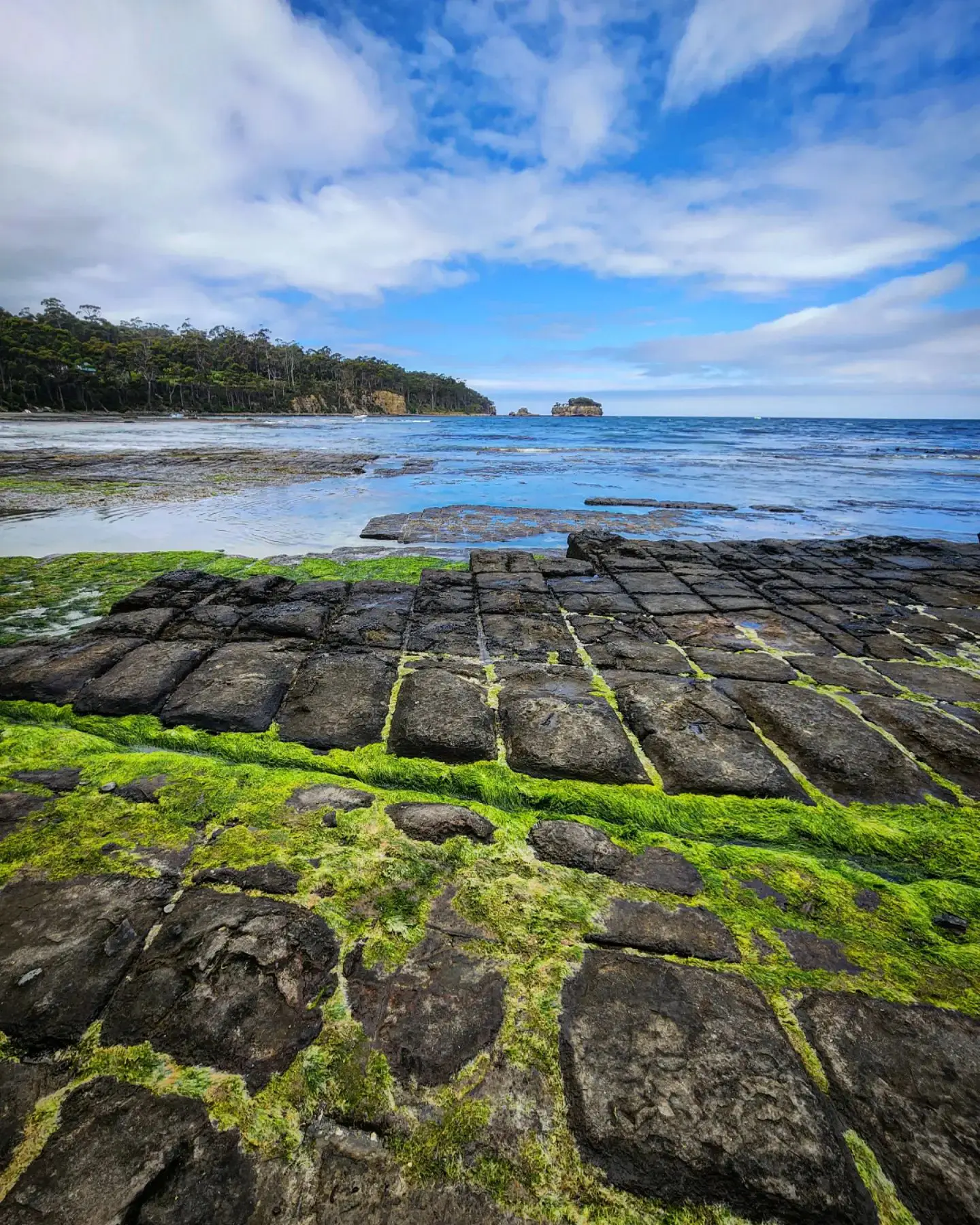
On the narrow isthmus of Eaglehawk Neck, where the Tasman Peninsula meets the sea, a stretch of coastal rock platform does something that looks almost impossible — it has fractured itself into near-perfect rectangular tiles, like the work of an obsessive stonemason working at geological scale. This is the Tessellated Pavement, one of the most photographed and genuinely surprising natural formations in Australia, and it costs nothing to visit.
The pavement formed over millions of years in fine-grained Permian siltstone, with wave action, salt weathering, and freeze-thaw erosion carving the rock along natural joint lines until the grid pattern emerged. The result is two distinct pavement types visible from the same short walk: pan formations in the lower intertidal zone, where wave erosion has hollowed the centres of each tile, and loaf formations on the higher platform, where salt crystallisation has built up the centres into slightly raised, rounded humps. Standing on it feels quietly surreal — the kind of natural wonder that makes you look twice to confirm it’s real.
The Tessellated Pavement sits within the Tasman National Park and is composed of Permian-age mudstone and siltstone approximately 260–290 million years old. The rectangular cracking pattern — known as orthogonal jointing — formed as the rock cooled and contracted. Over thousands of years, marine erosion has exploited these joint lines, carving the platform into the grid of tiles visible today.
Two distinct erosion processes have created the two pavement types at Eaglehawk Neck. In the lower, more wave-exposed zone, repeated wetting and the abrasive action of sand and pebbles has eroded the centres of tiles downward, creating shallow depressions that hold water at low tide — these are the pan formations. Higher up the platform, where the rock dries between tides, salt crystals formed by evaporating seawater expand in the tile centres and gradually build them up into domed loaf formations. The contrast between the two types is visible on the same short walk and is part of what makes the site so compelling for geology enthusiasts.
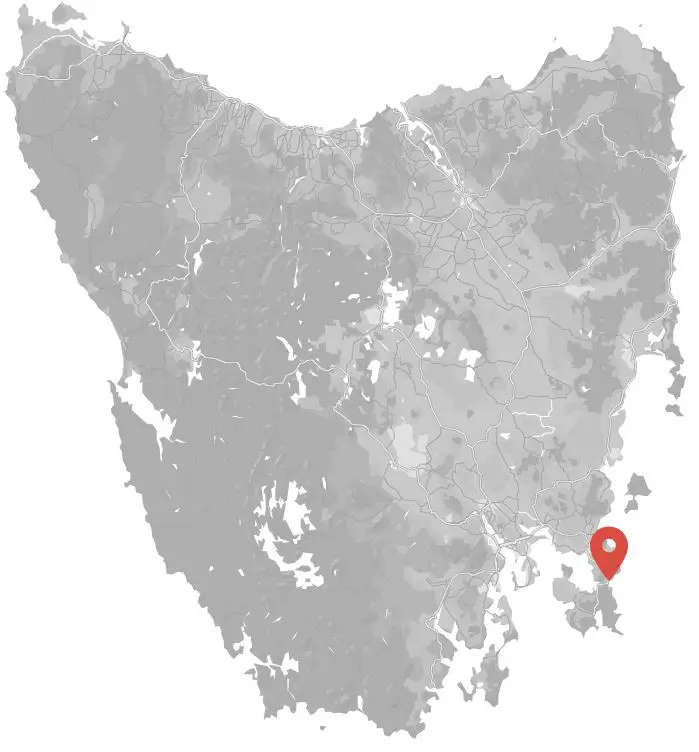
The Tessellated Pavement is located approximately 90 minutes southeast of Hobart via the Arthur Highway (A9), turning off at Eaglehawk Neck. A small car park on Pirates Bay Drive provides direct access, with a short 5–10 minute walk down to the pavement platform. The site is within Tasman National Park — a Tasmania Parks Pass is required for vehicle entry. The walk to and across the pavement is easy and flat, suitable for most ages and fitness levels, though the rock surface can be slippery when wet so sturdy footwear is recommended.
The best time to visit is at or near low tide, when the full extent of the pavement is exposed and the pan formations are most clearly visible. The light on the east-facing platform is best in the morning. Allow 30–45 minutes to walk out to the pavement, explore both tile types, and take in the views across Pirates Bay.
The Tessellated Pavement is ideally positioned as part of a half-day or full-day Eaglehawk Neck loop. Within 5 minutes’ drive are the Tasman Arch, Devil’s Kitchen, and the Blowhole — three dramatic coastal formations carved by the same geological forces and all free to visit within Tasman National Park. The drive between them offers some of the most spectacular clifftop scenery on the east coast of Australia.
Port Arthur Historic Site is approximately 40 minutes south of Eaglehawk Neck and warrants at least half a day on its own. Tasman Island Cruises and Cape Raoul Cruises, both operating from Port Arthur, offer world-class sea-level views of the peninsula’s towering sea cliffs. Combining the Tessellated Pavement, the Eaglehawk Neck coastal formations, and Port Arthur into a single day makes for one of the best full-day itineraries from Hobart.
Location: Pirates Bay Drive, Eaglehawk Neck, Tasman Peninsula — 90 min southeast of Hobart
Entry: Free to walk; Tasmania Parks Pass required for vehicle parking within Tasman National Park
Walk: Short, easy, 5–10 min from car park to pavement — flat ground, suitable for all ages
Best time: Low tide; morning light for photography
Footwear: Sturdy shoes recommended — rock surface slippery when wet
Dogs: Not permitted in Tasman National Park
Facilities: No toilets or café at the site itself; facilities available at Eaglehawk Neck township (5 min drive)
The Tessellated Pavement is a natural coastal rock formation at Eaglehawk Neck on the Tasman Peninsula, approximately 90 minutes from Hobart. The rock platform — composed of Permian siltstone around 260–290 million years old — has been fractured by geological jointing and shaped by wave and salt erosion into a distinctive grid of near-rectangular tiles that resemble a tiled floor. It is one of the most photographed natural attractions in Tasmania and is free to visit within Tasman National Park.
The Tessellated Pavement is approximately 75 kilometres from central Hobart, via the Arthur Highway (A9) through Sorell and Dunalley to Eaglehawk Neck — a drive of around 90 minutes. It is easily combined with other Eaglehawk Neck attractions (Tasman Arch, Devil’s Kitchen, Blowhole) and Port Arthur Historic Site into a full-day itinerary from Hobart.
Walking to and on the Tessellated Pavement is free. However, the site is within Tasman National Park and a Tasmania Parks Pass is required for vehicle parking at the car park on Pirates Bay Drive. Day passes are available at self-registration stations at park entrances or online via the Parks Tasmania website.
The Tessellated Pavement at Eaglehawk Neck displays two distinct formation types that can be seen on the same visit. Pan formations occur in the lower intertidal zone, where wave erosion has worn down the centres of tiles to create shallow water-holding depressions. Loaf formations occur higher on the platform, where salt crystal growth from evaporating seawater has built up the tile centres into slightly domed, rounded shapes. The contrast between the two types is a key part of what makes the site geologically significant.
Visit at or near low tide for the best experience — the full extent of the pavement is exposed and the pan formations, which hold seawater, are most clearly defined. Morning light on the east-facing platform produces the best conditions for photography. The site is accessible and worthwhile in all seasons; summer provides warmer conditions and longer daylight, while the pavement can be dramatically lit during stormy weather in autumn and winter.
Yes — the walk from the car park to the pavement is short (5–10 minutes) and flat, making it accessible for children and most mobility levels. The rock surface is fascinating and interactive for curious kids, though it can be slippery when wet so closed-toe shoes are recommended. Swimming is not advisable at this location due to wave action on the exposed rock platform. The nearby beaches at Pirates Bay are better suited for a swim.
Within 5 minutes’ drive of the Tessellated Pavement are the Tasman Arch, Devil’s Kitchen, and the Blowhole — three dramatic sea-carved formations along the Eaglehawk Neck clifftops, all free to visit within Tasman National Park. Doo Town, the quirky coastal settlement where every house name includes the word “doo”, is just minutes away. Port Arthur Historic Site is approximately 40 minutes further south and is one of Australia’s most significant heritage destinations.
The Hobart and Beyond Editorial Team is dedicated to bringing you the best insider tips, local stories, and up-to-date guides to exploring southern Tasmania.
Article Details: