TasALERT real-time fire, emergency warnings | FUEL CHECK Tas

Wishlist

As you browse the site, add accommodation, tours, events and attractions to your personalised trip by clicking the heart icon. When you’re done, click the heart icon in the menu at the top of the website to view your wishlist.

Review your list, remove any items you no longer need, then select “View your itinerary” to see your trip on a map, or send it to a friend.

The Turning of the Fagus – Tasmania’s Deciduous Tree

Where to See Tasmania's Autumn Colour in Southern Tasmania

Home » Blog » 

The Turning of the Fagus – Tasmania’s Deciduous Tree

Each autumn, southern Tasmania’s alpine highlands stage one of Australia’s most extraordinary natural events, the turning of the fagus.

This is the moment when Nothofagus gunnii, Tasmania’s only native deciduous tree and Australia’s only cold-climate winter-deciduous species, transforms entire mountainsides into a blazing tapestry of gold, orange, and red before shedding its leaves for winter.

For visitors based in Hobart, the great news is that some of the most spectacular fagus displays in the entire state are right on your doorstep. Mount Field National Park, the Hartz Mountains, and the Central Highlands offer world-class autumn colour, all within a 1.5 to 2-hour drive of the city.

What Is Fagus?

Tasmania’s Living Fossil

Known locally as fagus, deciduous beech, or tanglefoot (a nod to its low, twisted branches that catch walkers off guard), Nothofagus gunnii is one of the most ancient and significant plants on the planet. A true living relic of the supercontinent Gondwana, fagus has existed for around 40 million years and was once distributed across the entire southern hemisphere, including Antarctica.

Today, fagus survives only in the remote alpine areas of Tasmania — restricted to cool, wet, high-altitude environments typically above 800 metres, where winter snowfall is common and the land has remained unburnt. Almost three-quarters of the remaining population is protected within the Tasmanian Wilderness World Heritage Area.

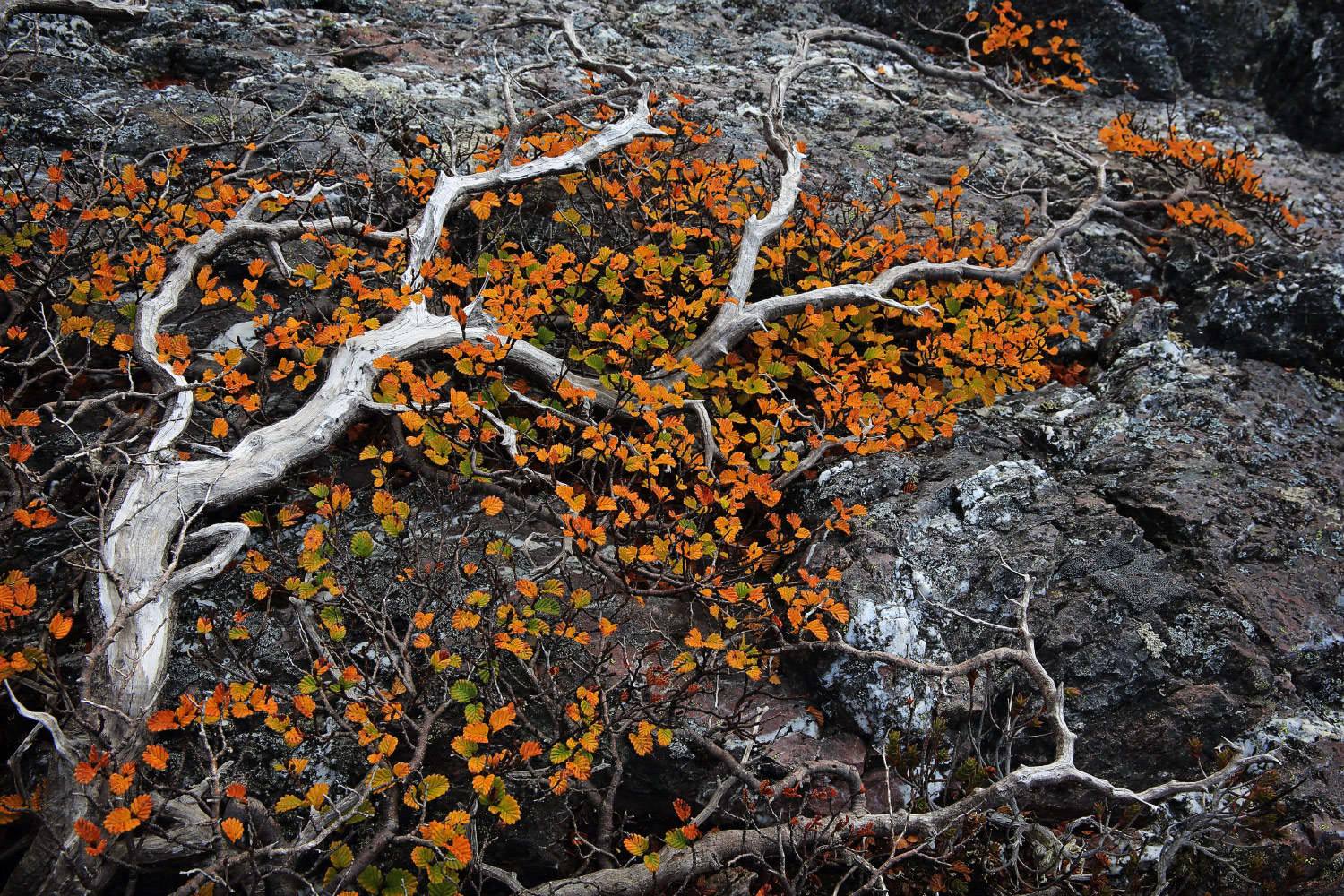
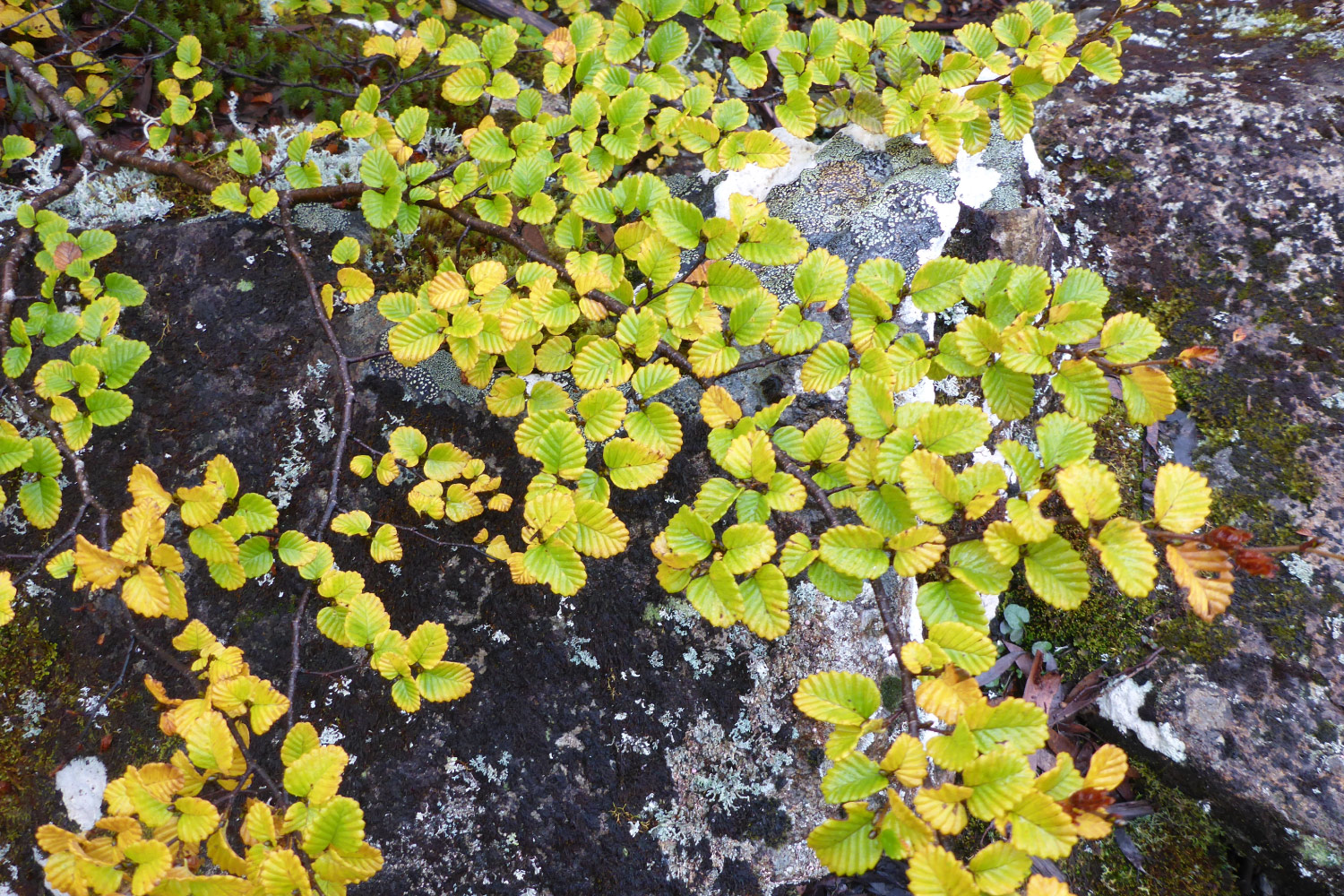
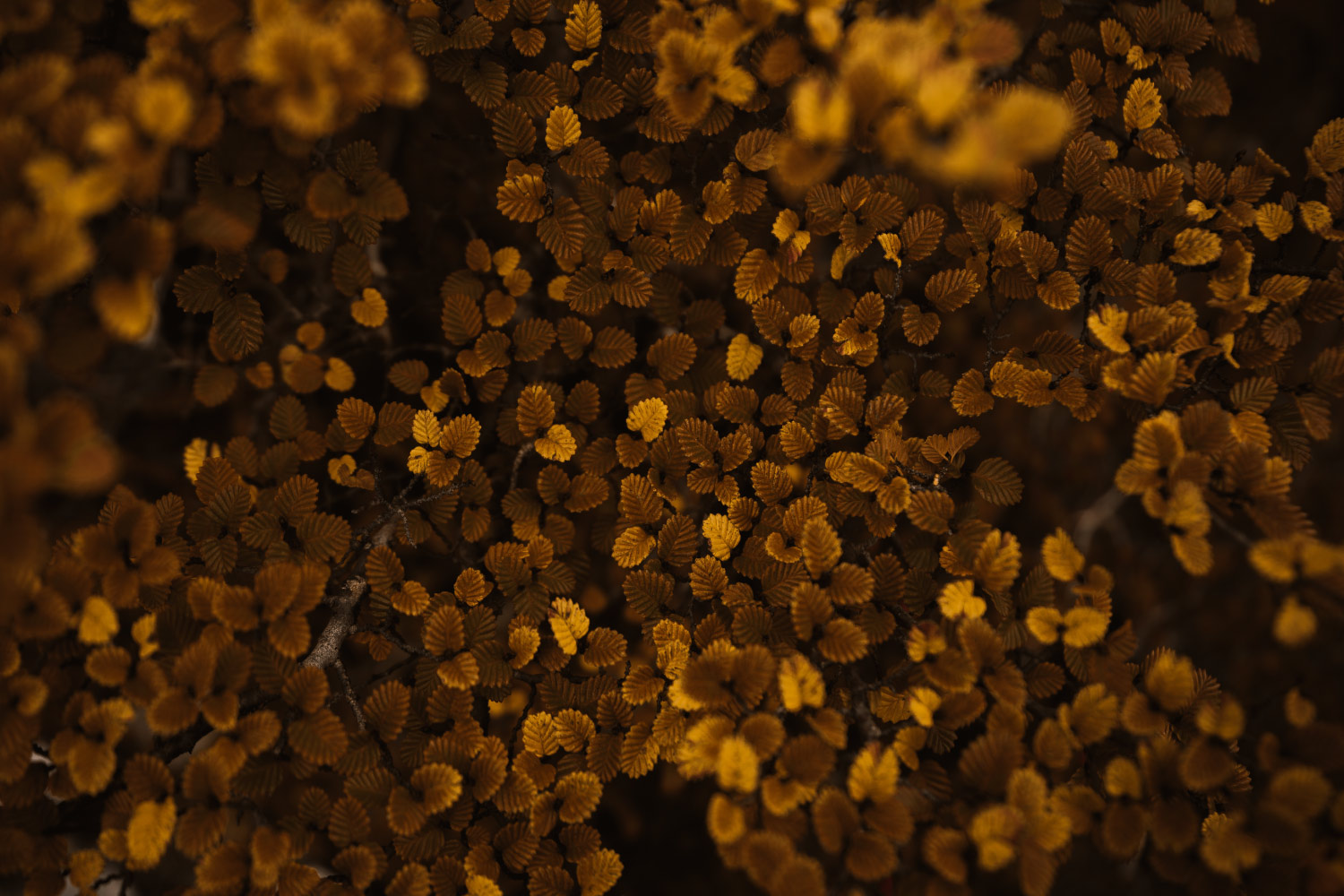
The leaves are instantly recognisable: small, crinkle-cut, and deeply furrowed from being tightly folded inside the bud. This distinctive shape is what gives the autumn colour display such a rich, textured appearance across entire hillsides.

Fagus, Mt Field National Park. Image Credit: Lucy Bradshaw

Why Do the Leaves Change Colour?

The colour change begins when shortening days trigger the tree to wind down its summer growth. As chlorophyll — the green pigment that captures sunlight — is broken down and reabsorbed, the underlying yellow-orange carotenoid pigments are revealed, producing the golden tones fagus is famous for.

In some trees and under certain conditions, red-purple anthocyanin pigments also become prominent, especially after hard frosts, producing the fiery reds and oranges that make the display so spectacular. “They usually start to turn yellow around March, then progress to orange,” explains Steve Leonard, senior ecologist with Natural Resources and Environment Tasmania. “If it’s particularly frosty they may turn a deep red, before shifting to a rusty brown and finally falling off. It is not unusual to see one plant exhibit the full spectrum of colours at the one time.”

The exact intensity varies from year to year depending on temperature, rainfall, and the timing of the first hard frosts — which is why no two fagus seasons are ever quite the same.

Fagus. Image Credit: Camerone Blake
Fagus, Mt Field National Park. Image Credit: Darren Wright
Fagus, Mt Field. Image Credit: Darren Wright
Fagus, Mt Field National Park. Image Credit: Darren Wright

When Is the Best Time to See the Fagus?

The turning of the fagus is weather-dependent, but follows a reliable general pattern. Colour changes can begin as early as March, with the display typically peaking around ANZAC Day (25 April) into early May and remaining vibrant for several weeks, through May.

ANZAC Day has become the unofficial pilgrimage date for fagus seekers, with Mount Field attracting large numbers of visitors around this time. However, the window of opportunity can be narrow, a single storm with strong winds can strip the leaves rapidly.

Fagus, Lake Fenton, Mt Field. Image Credit: Darren Wright

Where to See the Fagus in Southern Tasmania

Southern Tasmania is home to some of the most accessible and rewarding fagus displays in the state. Here are the three key locations for visitors based in Hobart or travelling Southern Tasmania.

1. Mount Field National Park — The Classic Destination

Mount Field National Park is the most popular fagus viewing location in southern Tasmania, and arguably in the entire state. Located approximately 75–80 km north-west of Hobart in the Derwent Valley, it is accessible in around 1.5 hours via New Norfolk.

From the park entrance, Lake Dobson Road — a 16 km unsealed gravel road — climbs through shifting forest zones to reach the alpine heart of the park. The drive itself passes through groves of roadside fagus, making it worthwhile even before you step out of the car.

Lake Fenton is the first major stop along Lake Dobson Road. It offers an observation deck and an easy, mostly flat lakeside walking track — the Lake Fenton Fagus Walk — specifically designed to provide accessible fagus viewing for all fitness levels. In autumn, the still water reflects the gold and rust tones of the surrounding trees, making it one of the most photographed spots in the park.

For a more immersive experience, continue to the Tarn Shelf — a glacially sculpted alpine bench at approximately 1,200 metres above sea level, sitting at the heart of the Rodway Range. The Tarn Shelf Circuit (approximately 15–16 km, 5–7 hours, moderate to hard) passes through some of the most spectacular fagus stands in the park, with the leaves reflected in glacial tarns on clear days. Sturdy footwear, waterproof layers, plenty of food and water are essential for this walk.

Fagus, Mt Field. Image Credit: Darren Wright

2. Hartz Mountains National Park — The Hidden Gem

Located approximately 1.5 hours south of Hobart — through the scenic Huon Valley and past Geeveston — the Hartz Mountains National Park is an often-overlooked gem for fagus viewing. Part of the Tasmanian Wilderness World Heritage Area, the park sits mostly above 600 metres, with Hartz Peak reaching 1,255 metres and offering 360-degree views stretching from kunanyi/Mt Wellington to Bruny Island and Federation Peak.

The Lake Esperance Walk (3.4 km return, Grade 2, approximately 2 hours) is the ideal entry-level walk for fagus viewing at Hartz. Starting at the Hartz Peak trailhead, the walk follows a mostly boardwalk route to a beautiful glacial lake, with views over south-east Tasmania and the Huon River Valley. In autumn, the surrounding alpine slopes come alive with fagus colour.

Those seeking a bigger adventure can tackle the Hartz Peak Track (7.6–7.8 km return, Grade 3–4, 3–5 hours) which climbs to the summit through scree slopes and open alpine moorland — rewarded with panoramic views and extensive fagus stands along the way.

Getting there: Take the Huon Highway south from Hobart to Geeveston, then follow the signs via Arve Road to Hartz Road, which leads all the way to the park car park.

Fagus, Hartz Mountains. Image Credit: Udesh Madhusanka Photography

3. The Central Highlands — For the Off-the-Beaten-Track Explorer

Also known as Tasmania’s Lake Country, the Central Highlands is a sub-alpine moorland of ancient tarns and buttongrass plains that receives far fewer visitors than Mt Field during the fagus season — making it a wonderful option for those who prefer solitude.

Pine Lake, accessible directly from the Highland Lakes Road (A5), approximately 33 km south of Deloraine, offers an easy 800-metre return boardwalk walk through alpine flora at around 1,200 metres altitude. While the walk is primarily known for its ancient pencil pines, fagus can also be found in the surrounding landscape, and the drive through the Central Plateau in autumn is itself a spectacle.

The broader Central Plateau Conservation Area — on the northern edge of the Tasmanian Wilderness World Heritage Area — features vast sub-alpine moorlands where fagus patches appear among the lakes and tarns of the highland interior. Experienced bushwalkers can explore deeper into the Western Lakes region, where fagus is found around mountain lakes such as Lake Augusta and the Walls of Jerusalem surrounds.

Walking through the Fagus. Image Credit: Emilie Ristevski
📷 Emilie Ristevski

Practical Visitor Information

National Park Entry Fees:
A valid parks pass is required for entry to Mt Field and Hartz Mountains National Parks. Current fees include:

  • 24-hour vehicle pass (up to 8 people): $46.60

  • Holiday pass (up to 2 months, all parks): $95.50 per vehicle

  • Annual pass: from $99.20

Passes can be purchased online at parks.tas.gov.au, at the park visitor centre, or at Service Tasmania outlets.

Fagus (Nothofagus Gunnii). Image Credit: Tourism Tasmania and Arwen Dyer
📷 Tourism Tasmania and Arwen Dyer

What to Wear and Bring:
The alpine environment at all three locations is exposed and weather can change without warning. Pack:

  • Waterproof jacket and over-trousers

  • Warm layers (fleece or merino wool base layers, hat and gloves)

  • Sturdy, waterproof hiking boots

  • Sunscreen and sunglasses (UV is intense at altitude even in autumn)

  • Plenty of food and water

  • Hiking poles (useful for the Tarn Shelf Circuit and Hartz Peak Track)

Photography:

Early morning and late afternoon light in autumn produces the warmest tones on the fagus. At Mt Field, the boulder fields of the Tarn Shelf provide striking contrast to the golden leaves, while Lake Fenton offers the classic reflection shot. At Hartz, the sweeping views from the upper track give context to the scale of the colour change across the southern ranges.

Frequently Asked Questions

The turning of the fagus is the annual autumn colour change of Nothofagus gunnii, Tasmania’s only native deciduous tree. Its small crinkle-cut leaves turn from green to shades of gold, orange, and red before falling for winter — typically peaking around ANZAC Day (25 April).

Mount Field National Park is the most popular and accessible location, particularly the Tarn Shelf and Lake Fenton areas. Hartz Mountains National Park is a lesser-known alternative with spectacular views, and the Central Highlands offers a more remote, off-the-beaten-track experience.

Colour changes typically begin in late March, peak around ANZAC Day (25 April), and can remain vibrant through May. The exact timing depends on weather conditions. Check Parks Tasmania’s fagus updates at parks.tas.gov.au before visiting.

Mount Field National Park is approximately 75–80 km north-west of Hobart, a drive of around 1.5 hours via New Norfolk and the Derwent Valley.

Yes. A valid parks pass is required to enter Mt Field and Hartz Mountains National Parks. A 24-hour vehicle pass is $46.60. Passes can be purchased at parks.tas.gov.au or at the park visitor centre.

Share your adventures with Hobart and Beyond!

Have you seen the turning of the fagus this year? Share your photos with us — tag @hobartandbeyond and use #HobartandBeyond on Instagram. We feature our favourite shots across our articles and social posts.

Picture of Hobart and Beyond Editorial Team

Hobart and Beyond Editorial Team

The Hobart and Beyond Editorial Team is dedicated to bringing you the best insider tips, local stories, and up-to-date guides to exploring southern Tasmania.

Article Details:

Article Created: 27 March 2023
Last Update: 28 April 2026
Author: Darren Wright
Skip to content