TasALERT real-time fire, emergency warnings | FUEL CHECK Tas
As you browse the site, add accommodation, tours, events and attractions to your personalised trip by clicking the heart icon. When you’re done, click the heart icon in the menu at the top of the website to view your wishlist.
Review your list, remove any items you no longer need, then select “View your itinerary” to see your trip on a map, or send it to a friend.
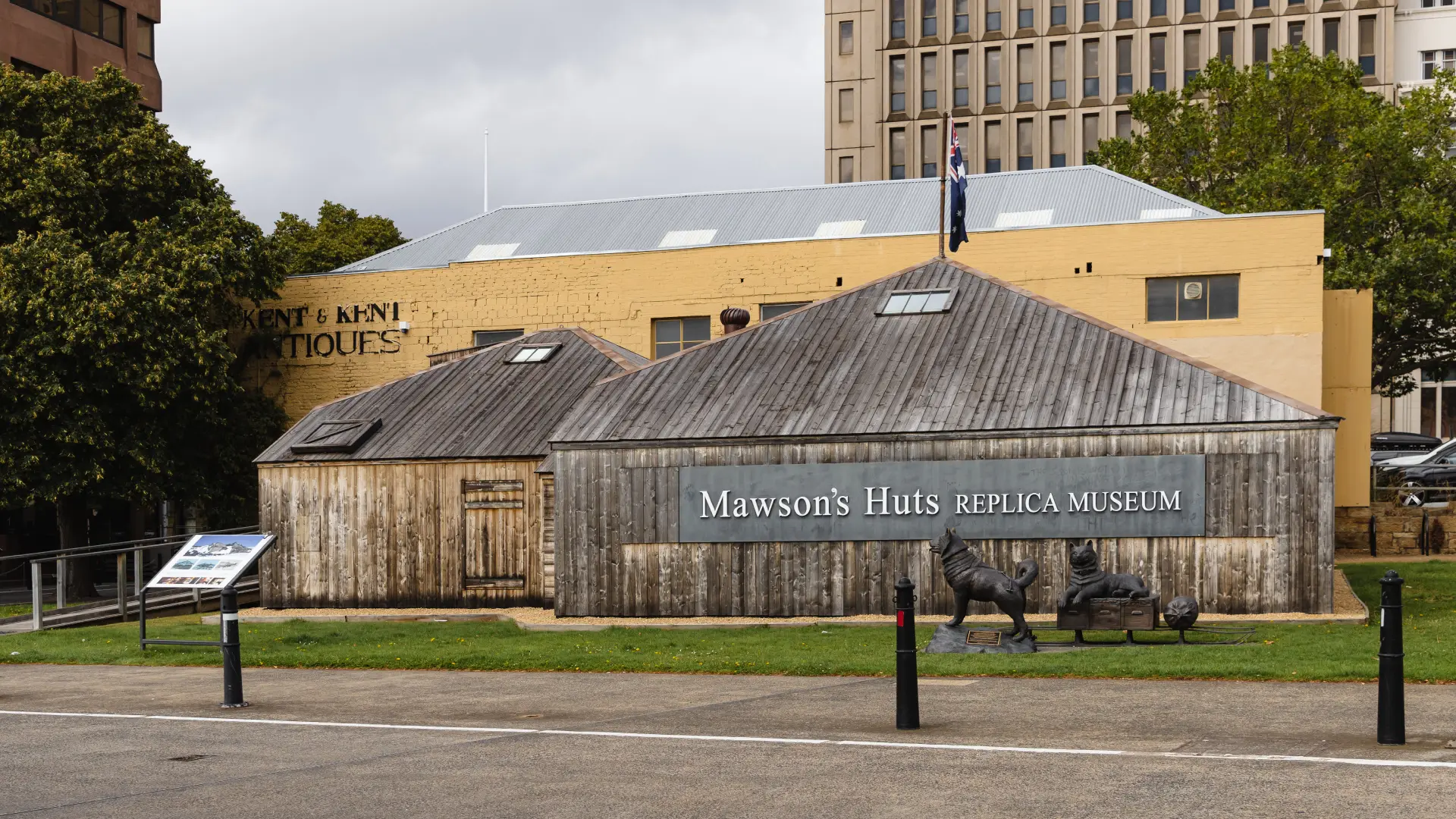
Hobart is one of the closest cities in the world to Antarctica, and few places in Australia make that connection more tangible than the Mawson’s Huts Replica Museum. Located at the edge of Constitution Dock — the same working waterfront from which Antarctic vessels still depart today — the museum is a meticulously accurate reconstruction of the huts built at Cape Denison, Commonwealth Bay, for Sir Douglas Mawson’s Australasian Antarctic Expedition of 1911–1914.
The original huts still stand on the Antarctic continent, battered by some of the fiercest winds on Earth. The Hobart replica was built to honour them and to bring the extraordinary story of Mawson’s expedition — one of the most scientifically significant and physically punishing in the history of Antarctic exploration — to the people who can’t make the voyage south themselves. It is, in every sense, a place where history is still very much alive.
Sir Douglas Mawson (1882–1958) is widely regarded as one of the greatest Antarctic explorers of the heroic age of exploration. An Australian geologist, he first visited Antarctica as part of Ernest Shackleton’s Nimrod Expedition (1907–09), reaching the South Magnetic Pole for the first time in history. His own Australasian Antarctic Expedition (1911–1914) was groundbreaking in its scientific scope — mapping vast stretches of the Antarctic coastline, collecting geological and biological data, and conducting atmospheric research. Mawson survived the expedition under almost impossibly brutal conditions, including the loss of both his companions on the Far Eastern Sledging Journey and a solo trek of nearly 100 miles back to the base huts in the depths of the Antarctic winter. His account, The Home of the Blizzard, remains one of the most remarkable survival stories in exploration history.
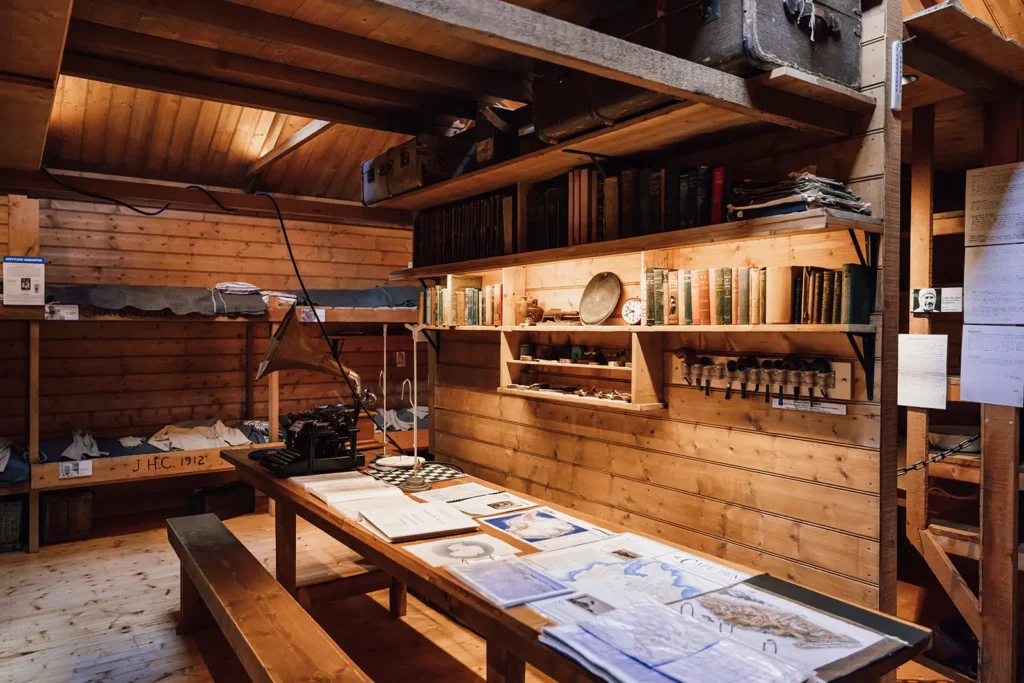
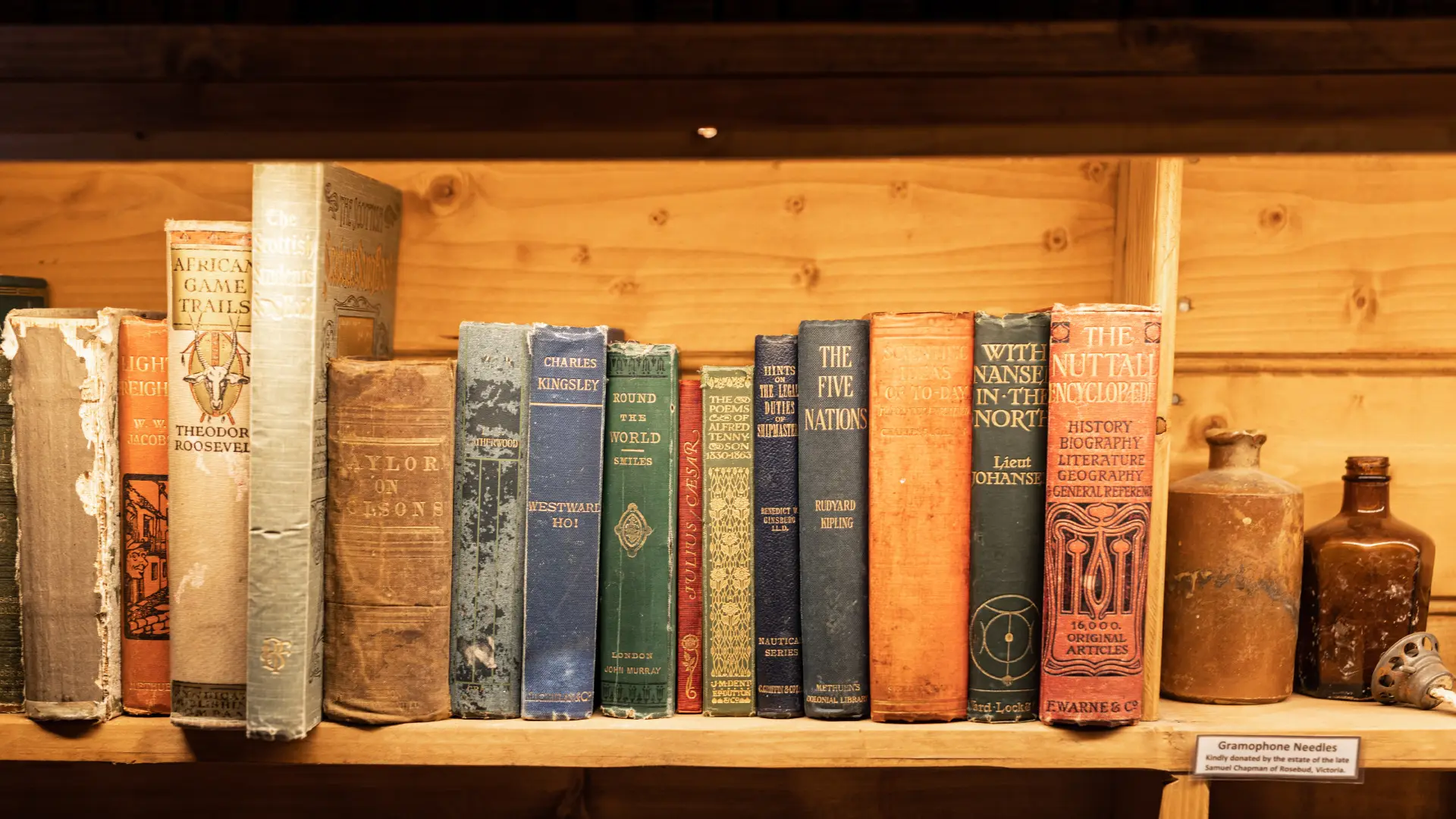
The replica huts are built to the original floor plans and fitted out with period-accurate equipment, supplies, furnishings, and scientific instruments — many of them original artefacts on loan from collections held by the South Australian Museum and other institutions. Visitors can walk through the main living hut (known as the “Absolute Magnetic Hut”), the magnetic observatory, the transit hut, and the workshop area, experiencing the cramped, functional spaces that Mawson’s team of 18 men inhabited through a two-year Antarctic winter.
Interpretive displays throughout the museum cover the expedition’s scientific achievements, the daily life of the expeditioners, the role of Hobart as an Antarctic gateway city, and the ongoing conservation of the original huts at Cape Denison — which are heritage-listed under the Antarctic Treaty System.
Enhance your visit with guided tours led by knowledgeable experts well-versed in the history and significance of Mawson’s expeditions. Their captivating narratives will offer deeper insights and anecdotes, enriching your understanding of the explorers’ trials and triumphs.
By visiting the Mawson’s Huts Replica Museum, you not only embark on a historical journey but also contribute to the preservation of Antarctic heritage. Your support helps maintain this tribute to exploration and scientific endeavour for future generations to appreciate.
Whether you’re a history enthusiast, an adventurer at heart, or simply intrigued by tales of exploration, the Mawson’s Huts Replica Museum promises an unforgettable experience. Delve into the legacy of Antarctic exploration and immerse yourself in the remarkable story of Sir Douglas Mawson and his intrepid team.
The museum’s location is not coincidental. Hobart has been the principal departure and resupply point for Australian Antarctic operations since the early 20th century, and the city maintains that role today. The Australian Antarctic Division is headquartered in the Hobart suburb of Kingston, and research vessels including the RSV Nuyina — Australia’s new icebreaker, one of the most advanced polar research vessels in the world — berth at Macquarie Wharf, visible from the museum. For visitors interested in Antarctica, Hobart is the starting point for the entire Australian program.
Location: Corner of Argyle and Morrison Streets, Hobart CBD — directly opposite Constitution Dock, a 5-minute walk from Salamanca Place.
Opening hours: Daily 10am–5pm (last entry 4:30pm). Check mawsons-huts.org.au for holiday period variations.
Admission: Adults ~$15, Concession ~$10, Children (under 12) free. Family passes available.
Guided tours: Available daily — strongly recommended as guides bring the expedition story to life in ways the exhibits alone cannot. Tour duration approximately 45 minutes.
Allow: 1–1.5 hours for a self-guided visit; 2 hours with a guided tour.
Accessibility: Ground floor accessible. Contact the museum in advance for specific accessibility needs.
Parking: Limited street parking nearby. The Hobart waterfront car parks on Davey Street and Morrison Street are the closest paid options.
Combine with: Constitution Dock fish punts (lunch), the Tasmanian Museum and Art Gallery (10 min walk), and Salamanca Place make this a natural part of a full waterfront day.
Mawson’s Huts Replica Museum in Hobart is a full-scale faithful reconstruction of the expedition huts built at Cape Denison, Antarctica, for Sir Douglas Mawson’s Australasian Antarctic Expedition of 1911–1914. Located opposite Constitution Dock in central Hobart, the museum houses original artefacts, period equipment, and interpretive displays telling the story of one of the most significant scientific and survival expeditions in polar history. It is managed by the Mawson’s Huts Foundation, a not-for-profit organisation dedicated to conserving the original huts on the Antarctic continent.
The museum is located at the corner of Argyle and Morrison Streets in Hobart’s CBD, directly opposite Constitution Dock and within a short walk of Salamanca Place and the Hobart waterfront. It is one of the most centrally located major attractions in the city and easily combined with a Salamanca visit or waterfront lunch.
Allow approximately 1 to 1.5 hours for a self-guided visit. A guided tour adds around 45 minutes and is recommended — the guides provide context and anecdotes about the expedition that significantly enrich the experience. The museum is compact but densely detailed, and many visitors find they spend longer than expected.
Sir Douglas Mawson (1882–1958) was an Australian geologist and Antarctic explorer who led the Australasian Antarctic Expedition (1911–1914) — one of the most scientifically productive polar expeditions ever conducted. He first reached the South Magnetic Pole during Shackleton’s Nimrod Expedition in 1907–09, and later survived one of the most extraordinary solo survival ordeals in exploration history after losing both companions on a sledging journey deep in Antarctica. He is regarded as one of Australia’s greatest explorers and scientists, and his legacy is central to Australia’s ongoing presence in Antarctica.
Yes — the museum is well-suited to families with children aged 8 and above who have an interest in history, science, or adventure. The immersive replica environment is engaging for older children, and guided tours are delivered in an accessible and often dramatic storytelling style. Entry is free for children under 12. The museum’s themes of survival, teamwork, and scientific discovery make it a meaningful educational experience.
Hobart is Australia’s primary gateway to Antarctica. The Australian Antarctic Division, which manages Australia’s three permanent Antarctic research stations, is headquartered in the Hobart suburb of Kingston. Australia’s polar research vessel, the RSV Nuyina, operates out of Hobart’s Macquarie Wharf. The city has been the departure point for Australian Antarctic expeditions for over a century, and this deep connection to the ice is woven into Hobart’s identity — from the Mawson’s Huts Museum to the Antarctic and Southern Ocean Coalition and the regular public viewings of vessels departing for the south.
Yes — the original expedition huts at Cape Denison, Commonwealth Bay, are still standing and are heritage-listed under the Antarctic Treaty System. They are among the oldest surviving structures on the Antarctic continent. The Mawson’s Huts Foundation has conducted multiple conservation expeditions to stabilise and preserve the huts against the extreme winds and weather of Commonwealth Bay, which is one of the windiest places on Earth. The foundation funds this work through admissions and donations from the Hobart replica museum.
The Hobart and Beyond Editorial Team is dedicated to bringing you the best insider tips, local stories, and up-to-date guides to exploring southern Tasmania.
Article Details: